

School marketing plan example and template.
This school marketing plan example shows how an Indian private school can turn a seat target into a dated, budgeted campaign calendar. Copy the template, replace the illustrative numbers with your own, and you have a plan your management can approve in one meeting.
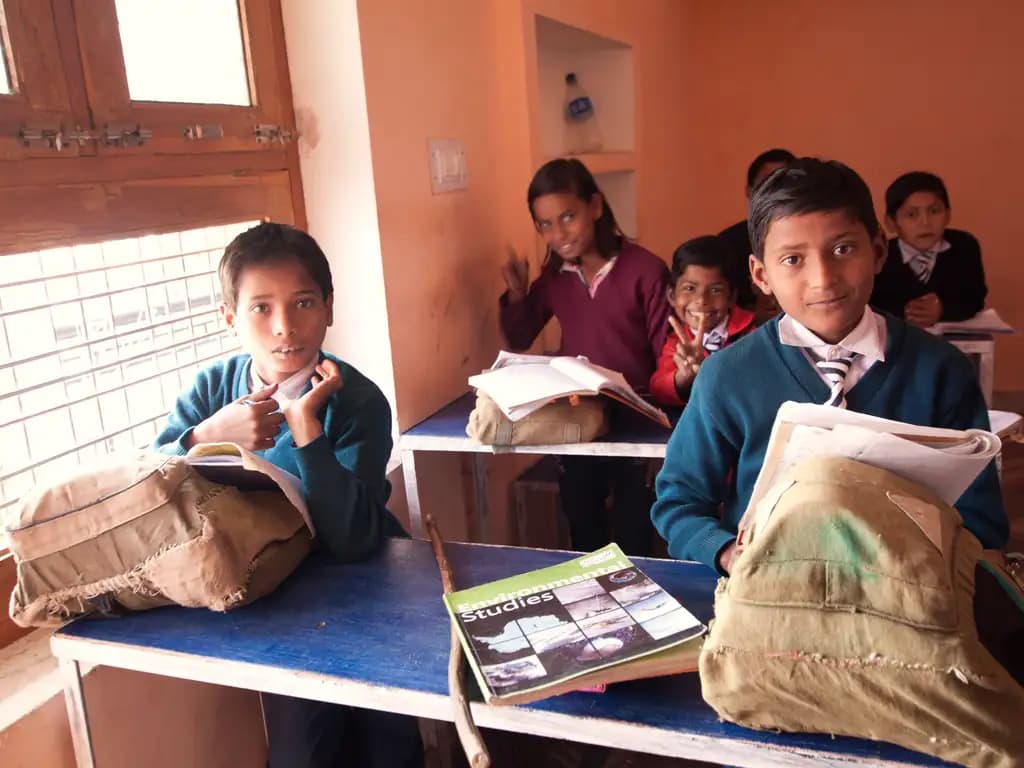
A school marketing plan is a short document that answers who you want to admit, how many, from where, by when, through which campaigns and at what cost. The school marketing plan example below is built for a fictional CBSE day school so you can see every section filled in. All numbers are illustrative.
The plan is one part of the admission cycle described in our school admission marketing guide. It assumes you have already chosen your channels; if not, read our digital marketing strategy for schools first.
The one-page school marketing plan template
Keep the plan to one page plus a calendar. Longer documents get filed and forgotten. These eight headings are enough.
| Section | What to write | Example entry (illustrative) |
|---|---|---|
| 1. Seat target | Seats by entry grade for the next session | Nursery 80, KG 20, Class 1 15, Class 6 20, Class 9 10 |
| 2. Catchment | Localities, pin codes, bus-route limits | 8 km radius; 14 sectors and 22 gated societies |
| 3. Audience | Primary decision-makers and influencers | Parents aged 28 to 42, salaried and business families |
| 4. Positioning | One line on why parents should choose you | CBSE school with small sections and a strong early-years programme |
| 5. Funnel target | Enquiries and visits needed per admission | 145 admissions needs about 1,100 enquiries and 440 visits |
| 6. Campaigns | Named campaigns with dates and channels | Open House October, Early Bird November, Final Seats February |
| 7. Budget | Media and production, by month and channel | ₹9 lakh media plus ₹2 lakh production |
| 8. Measurement | Weekly KPIs and owner | Cost per enquiry, visit rate, admissions; reviewed every Monday |
How the funnel target was calculated
Work backwards from seats. If 33% of campus visits convert to admission and 40% of enquiries book a visit, then 145 admissions need about 440 visits and 1,100 enquiries. Use your own last-year ratios if you have them. If you do not, start tracking now; our guide on how to generate leads for schools explains how to log sources so these ratios become reliable next year.
Month-by-month campaign calendar
Most CBSE and ICSE private schools with an April session open admissions between October and December. Adjust the months if your admission window starts later, as some IB and Cambridge schools do.
| Month | Campaign | Main channels | Goal |
|---|---|---|---|
| August | Preparation | Website audit, Google Business Profile, CRM set-up, creative shoot | Everything ready before spend begins |
| September | Awareness | Instagram reels, YouTube campus tour, society events | Build familiarity in the catchment |
| October | Admissions Open + Open House | Search ads, Meta lead ads, WhatsApp, hoardings | Peak enquiries and visit bookings |
| November | Early Bird | Search ads, retargeting, email to enquiries | Convert visitors with a time-bound reason to decide |
| December | Experience Days | Meta ads, WhatsApp invites, referral drive | Bring undecided parents back to campus |
| January | Results and Stories | Parent testimonial videos, alumni content, Search ads | Answer objections and compare favourably |
| February to March | Final Seats | Search ads on brand and locality terms, retargeting | Fill remaining grades |
| April to June | Mid-session and review | Search ads for transfers, CRM analysis | Catch relocating families and learn for next year |
Budget split for the example school
The example assumes ₹9 lakh of media spend across the season. This figure is illustrative. Real budgets vary by programme, city and season, and our guide to school marketing budget shows how to set your own.
| Channel | Share | Amount (illustrative) | Why |
|---|---|---|---|
| Google Search ads | 40% | ₹3.6 lakh | Highest-intent parents searching in the catchment |
| Meta ads (Instagram, Facebook) | 30% | ₹2.7 lakh | Open-house sign-ups and awareness |
| Retargeting (Google and Meta) | 10% | ₹0.9 lakh | Bring website visitors back before deadlines |
| YouTube | 10% | ₹0.9 lakh | Campus tour and principal videos |
| Local offline with QR codes | 10% | ₹0.9 lakh | Society standees and events that feed digital tracking |
What makes a school marketing campaign work
A school marketing campaign is a time-bound push with one message, one action and a deadline. "Open House on 19 October, book your slot" is a campaign. "We are the best school in the city" is a slogan, and parents ignore it.
- One clear action: book a visit, register for an open house, download the fee structure.
- A real reason to act now: limited visit slots, an early-bird date, a nursery age cut-off.
- Proof parents can check: board results, teacher profiles, real photographs of the campus.
- Consistent message across channels: the same date and offer on the hoarding, the reel and the WhatsApp message.
- Tracking from day one: UTM tags on every link and source captured in the CRM.
Types of school advertising campaigns that perform well
The best school advertising campaigns in India share a pattern: they show real people and real places, and they ask for one small step. These are the formats we see work most often.
- Open house campaigns: a dated event, promoted for three weeks with Meta lead ads and Search ads, followed by WhatsApp reminders 48 hours and 2 hours before.
- Day-in-the-life campaigns: a reel following a Class 3 child from bus to dispersal. Parents see routines, safety and teachers in one minute.
- Teacher spotlight campaigns: short videos of teachers explaining how they teach reading, maths or science. These answer the quality question better than any brochure.
- Parent voice campaigns: recorded with written consent, focused on a specific reason such as "why we moved from our previous school".
- Results campaigns in May: board toppers, subject averages and university admits, released when Class 10 and 12 results are announced.
- Referral campaigns: existing parents invite friends to an experience day; tracked through a unique form link.
For more creative ideas you can drop into the calendar, see social media ideas for schools and our list of school marketing ideas.
Trends in private school marketing for 2026-27
- Short video first. Instagram reels and YouTube Shorts are now the main way parents first see a campus.
- WhatsApp as the main conversation channel. Parents prefer to ask about fees and transport on WhatsApp before they call.
- AI search answers. Parents increasingly ask ChatGPT or Google AI Overviews for "good CBSE schools near me". Clear, factual pages on fees, facilities and admissions help schools appear in these answers.
- Fee transparency. More schools publish fee ranges or full structures; parents shortlist schools that do.
- Consent-aware data handling. The DPDP Act 2023 is pushing schools to state clearly why they collect parent data and how long they keep it.
- Offline conversion tracking. Schools importing admitted-student data back into Google Ads and Meta are teaching the platforms to find similar parents.
How to review the plan during the season
Hold a 30-minute review every Monday from October to March with the admission head, the marketing owner and, if you use one, your agency. Look at enquiries, visits and admissions by channel for the week, compare against the funnel target, and make one or two decisions. Move money from channels that produce enquiries but no visits to the ones producing visits.
If you want MSM CampusOS India to build and run the plan with you, our digital marketing agency for schools team has worked with 50+ schools as part of 1500+ institutions served.
Frequently asked questions
What should a school marketing plan include?
When should a school prepare its marketing plan?
What are examples of successful school marketing campaigns?
How much of the school marketing budget should go to digital?
Want more student admissions this year?
Get your free audit: website, SEO and AI visibility, ads, social and funnel, benchmarked against your peers.